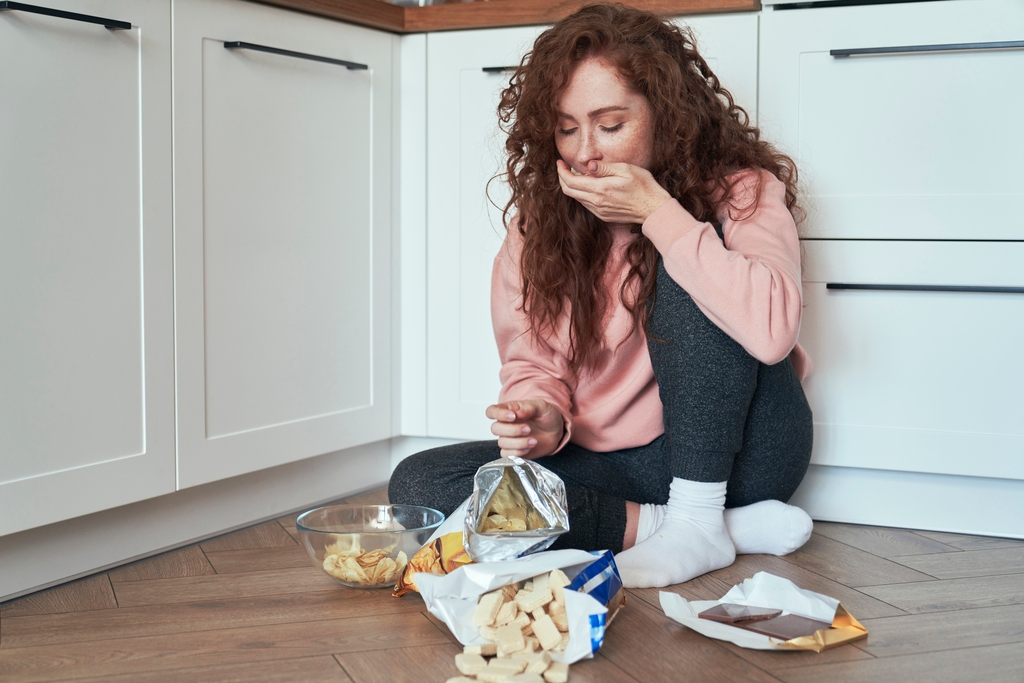

Have you ever found yourself reaching for a packet of cookies or another serving of your favorite comfort food despite your best intentions and a carefully planned diet?
If so, you're not alone. It's a common experience for many of us. We usually blame ourselves and our lack of willpower, but what if the cause lies deeper, in our emotions?
Lidia D. Czarkowska's article, "The Language of Emotions – From a Volcano of Anger to a Geyser of Joy: How to Harness the Power of Emotions for Constructive Action," sheds new light on how our inner experiences can sabotage our attempts at healthy eating and how we can change this.
Emotions – not an enemy, but an ally
What are emotions?
Emotional hunger - what is it?
Meanwhile, emotions don't disappear just because we ignore them. On the contrary, unexpressed feelings begin to accumulate. They build up in the body and mind like pressure in a closed kettle. And finally, with fatigue, lack of sleep, stress, hunger, or overload, they explode. Sometimes in the form of an outburst of anger, sometimes a panic attack, sometimes... a midnight trip to the fridge. When we no longer have the strength to maintain an emotional facade, we reach for the easiest way to regulate tension – food. But it's not physical hunger that compels us to eat. It's the need for solace, comfort, relief, that is, emotional hunger.
Learn to control emotional eating
Schedule a free 15-minute consultation.
How do specific emotions lead to emotional eating?
Understanding and accepting emotions is the first step not only to feeling better but also to lastingly changing our habits, including our eating habits. In the aforementioned article, Dr. Czarkowska describes the "language of emotions," or what our emotional states are trying to communicate to us. When we don't understand their messages, we seek solace in food rather than action.
Here are some examples of how it works:
- Fear / Anxiety
It's a warning signal: "Watch out! Get ready!" But too much anxiety can paralyze us. When we can't cope, we seek comfort—and food becomes a substitute for safety. - Hate
It says, "This is bad for you—stay away!" It can apply not only to things, but also to ourselves. If we feel disgust towards our own bodies and this is accompanied by a feeling of helplessness, anger arises, which we try to numb with food. - Anger
Anger appears when someone crosses our boundaries. It gives us energy to
defense. But if we feel powerless, anger can "implode",
turning into psychosomatic illnesses… or compulsive eating. - A sense of injustice
"You've lost something important," this emotion says. If we can't process it,
eating becomes a mechanism for soothing pain, instead of an impulse to act and regain what is valuable. - Feeling guilty
It's the inner accuser. It can lead to self-blame, shame, and…
punishing themselves with food. Paradoxically, people with low self-esteem
values often sabotage your healthy choices. - Frustration
“You’re not getting what you want.” If we don’t find another way to achieve our goal, discouragement turns into anger, and food becomes a way to escape the feeling of helplessness. - Sadness
It's a natural reaction to loss. But if, instead of experiencing grief, we "suppress" it with food, we don't allow ourselves to experience true solace and inner renewal.
How to regain control and build harmony?
Instead of fighting yourself, learn to read yourself. The key is to understand your emotions and give them space before they lead to compulsive behavior.
How to do it?
- Stop.
- Ask yourself: "What am I feeling? What is this trying to tell me?"
- Find a way to express your emotions. Through conversation, movement, art, and contact with others.
nature, breathing, prayer, meditation.
impulsively.
Summary
Emotional eating It's not a sign of weakness. It's not a failure, a lack of willpower, or proof that "something is wrong with you." It's a signal that something deep within you demands attention. It's the voice of emotions that no longer want to be ignored. When you learn to read this inner language, emotions will stop sabotaging your efforts. They will stop secretly controlling your choices. And you will gain something far more valuable than just control over your diet – you will regain peace, inner balance, and a genuine connection with yourself.
Remember, it's not about being "perfect." The most important thing is to be mindful, kind to yourself, and willing to listen to what your body and heart are telling you. Only then will healthy eating cease to be a struggle and become an expression of self-care.